
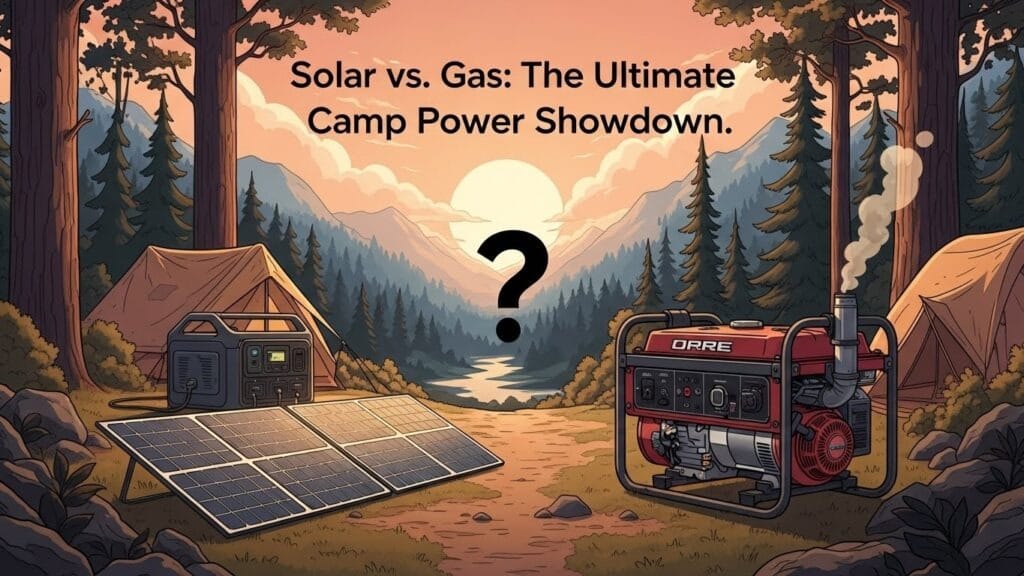
Camping and RV trips are an excellent way to get away, and be one with nature, yet being off the grid does not mean that you have to relinquish modern amenities. You may need to turn on a mini-fridge, phone, or coffee maker, and in such cases, a stable power source is a necessity. For most outdoor lovers, it is either solar or gas generators.
Each has its own benefits and drawbacks, and choosing one can make a huge difference in your camping experience. A gas generator may provide additional power, but its noise may disturb the peace that you went to seek. A solar generator is quiet and environmentally friendly; however, its efficiency depends on the sun.
This guide will dissect the significant differences between solar and gas generators. We will compare them across all aspects, including environmental impact, noise levels, cost, and reliability. By the end, you will understand which generator is most suitable for your camping and RV activities.
What Are Solar Generators?
A solar generator, or a portable power station, is a device that harnesses the energy of the sun, stores it in a battery, and later transforms it into valuable electricity. It is clean, silent, and growing in popularity as a way to power your devices off-grid.
How They Work
A solar generator system comprises three major components:
- Solar Panels: These collectors are called the collectors. They harness the sunlight and transform it into direct current (DC) electricity.
- Battery: The DC energy is stored in a high-capacity lithium-ion battery for later use.
- Inverter: You need power; the inverter converts the DC electricity stored in the battery into alternating current (AC), the form of power used by most household appliances and electronics.
The whole system is installed in a small unit that is easy to carry and operate. All you do is install the solar panels in a sunny area, attach them to the power station, and leave them to charge.
What Are Gas Generators?
Portable power has always been associated with gas generators. These machines operate on gasoline to generate electricity, using an internal combustion engine to provide a steady, reliable energy supply.
How They Work.
A gas generator works in the same way as a car engine, and it possesses a few main components:
- Engine: The engine that burns gas to produce mechanical energy.
- Alternator: The engine’s mechanical energy rotates the alternator, which converts it into AC electrical current.
- Fuel Tank: A tank that contains the gasoline required to power the engine. The generator can be refilled after a specified duration, depending on the tank size.
A gas generator is easy to use: you fill the tank with gasoline, start the engine (usually by a cord), and then connect your devices to its outlets.
Head-to-Head Comparison: Solar vs. Gas.
Next, we are going to compare these two sources of power to see how they perform on the aspects most important to campers and RV owners.
Environmental Impact
The obvious choice here is solar generators. They emit no emissions because they use only renewable, clean energy from the sun. This has made them a good option for all environmentally conscious campers who wish to reduce their carbon footprint.
Instead, gas generators incinerate fossil fuels. The process emits carbon monoxide and other greenhouse gases to the atmosphere. They also pose a risk of fuel spillage, which is dangerous to local ecosystems.
Noise Level
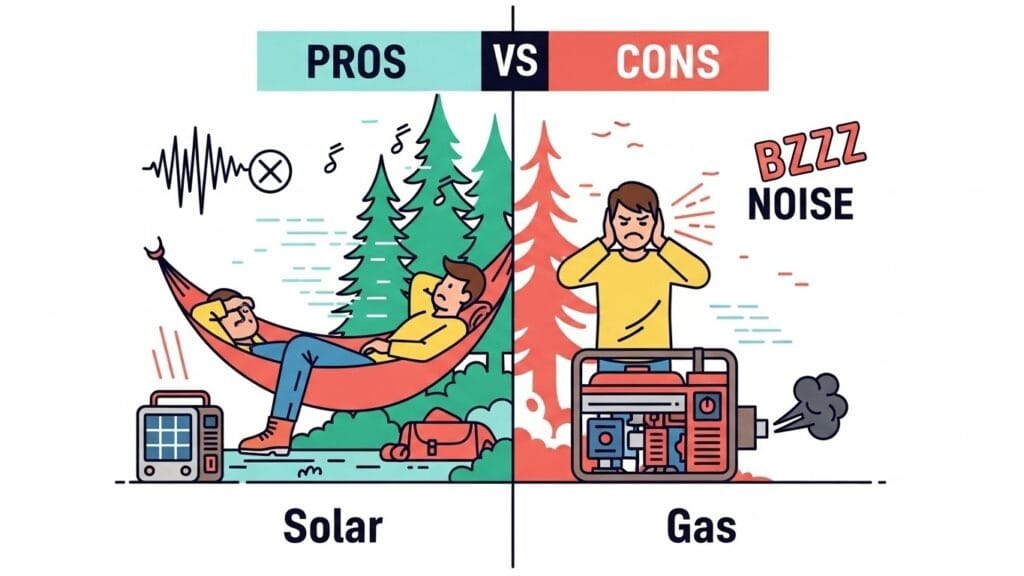
Noise is one of the most significant factors if you enjoy the peace of nature. Solar generators are almost noise-free. They have no moving parts, so you can hear the sounds of the wilderness without the engine buzzing constantly.
Gas generators are also infamously noisy. Their engines can be very noisy to the point of disturbing not only your camping but also that of other people. There are numerous campgrounds with regulations on when you can use a gas generator to minimize disturbance.
Fuel and Maintenance
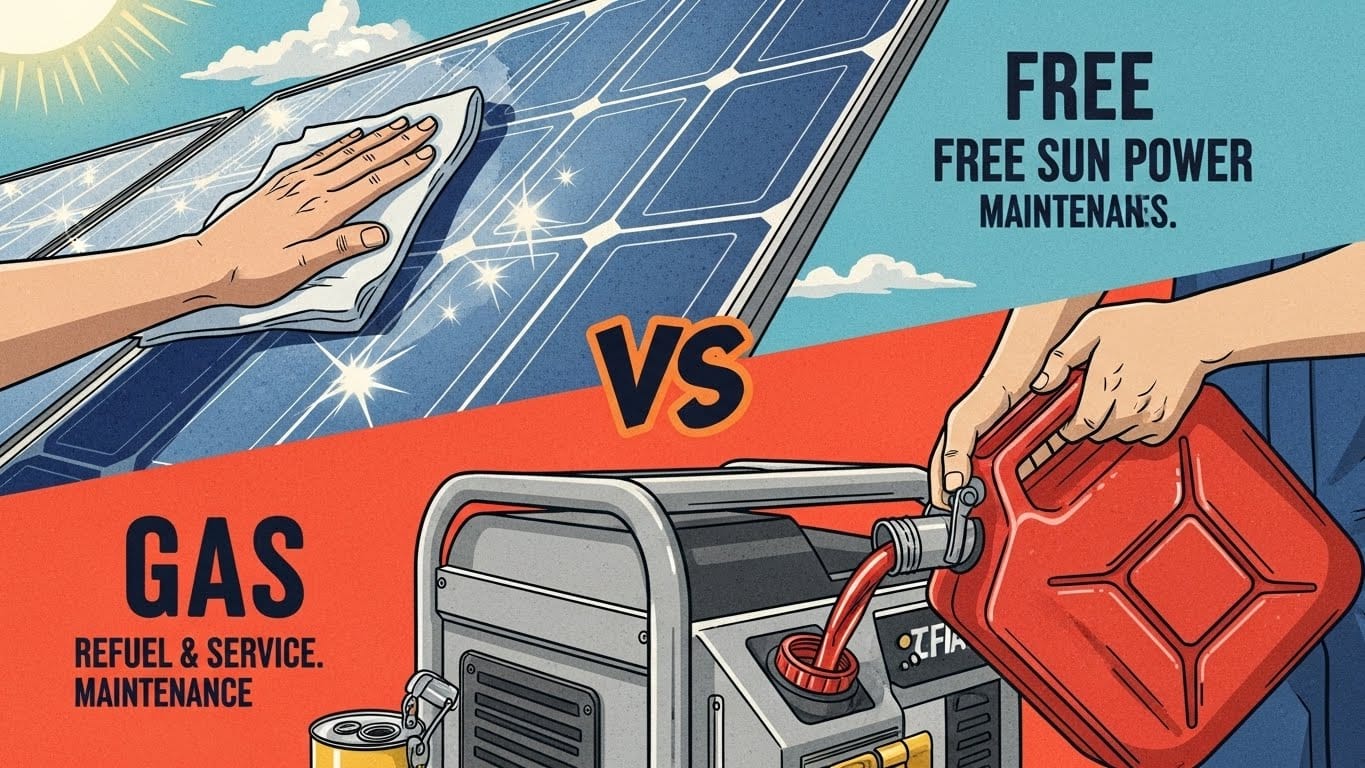
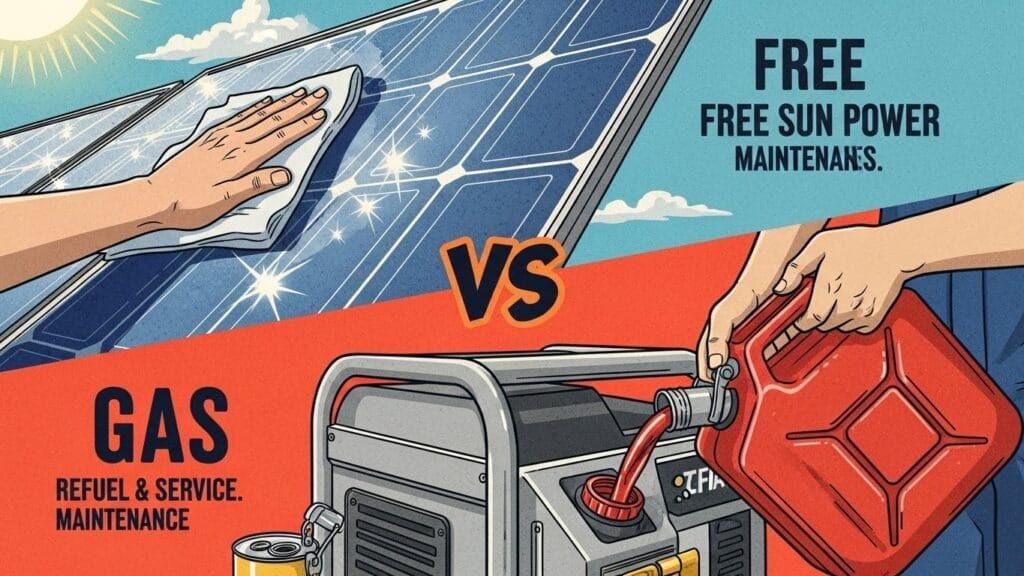
The sun is the source of fuel used by solar generators, and it is free and inexhaustible. They have low maintenance requirements. You will not need to worry about oil changes, spark plug replacements, or engine repairs, since there are no moving parts. The primary activity is the cleaning of the solar panels.
Gas generators require a steady supply of gasoline, which entails ongoing expense and logistical challenges. There is a risk of having to carry flammable fuel. They should also be maintained regularly, such as changing oil, replacing air filters, and checking on spark plugs to keep them in good shape.
Cost
In comparing costs, one should consider both the initial investment and the long-term costs.
- Initial Cost: Gas generators are usually cheaper than solar generators of the same power output. Nevertheless, the cost of solar technology continues to decrease, making it more affordable.
- Long-Term Cost: Solar generators also have virtually no long-term costs because their fuel is free. Gas generators require ongoing expenditures for gasoline, oil, and maintenance, which can be expensive in the long run.
Portability and Ease of Use
Both of them are portable. Solar generators tend to be lighter and smaller, particularly the smaller ones that can be carried on a backpack or in a bag. They are easy to use; all you have to do is plug in the panels and your devices.
Gas generators are cumbersome, especially the powerful ones. They are more challenging to start and operate, including refuelling and routine maintenance checks.
Performance and Reliability
Gas generators are high-performing and reliable. They can deliver a high, stable power supply as long as fuel is available, making them best suited to powering high-demand appliances such as air conditioners or microwaves. They operate during the day and night.
Solar generators require sunlight. They can hardly recharge during cloudy days or at night. Although a battery’s power capacity can be hours or even days, depending on how you use it, its overall power output is usually lower than that of gas generators. They are ideal for charging electronics and running small appliances, but might not handle larger loads.
Best Cases for each Generator.
When a Solar Generator is the Right Choice.
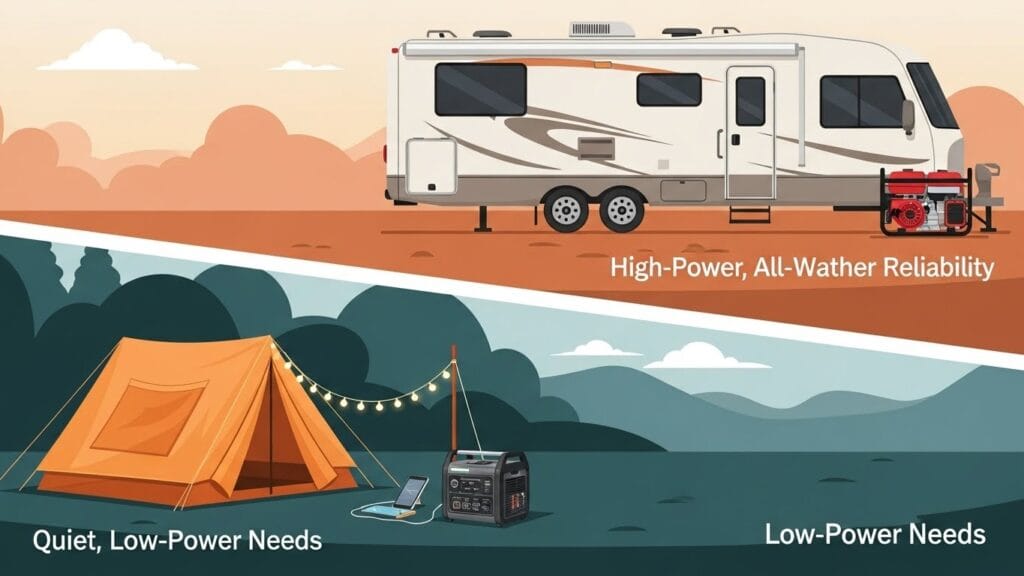
- Quiet Camping: This is tent camping or a calm RV park where people wish to maintain tranquillity.
- Eco-Friendly Travel: In case you want to have the least impact on the environment.
- Low-Power Needs: Charging phones, laptops, and cameras, and operating small appliances such as fans or lights.
- Low-Maintenance Preference: In case you require a set-and-forget power solution.
When a Gas Generator is to be used.
- High-Power Demands: In case of the necessity to use an RV air conditioner, microwave, or any other power-intensive appliances.
- All-Weather Reliability: On trips when the sun isn’t guaranteed, you need to be sure you will have power.
- Extended Off-Grid Stays: You have to use a generator long enough and carry enough fuel.
- Budget-Conscious Buyers: If the initial purchase price is a priority for you.
The Future of Powering Your Next Adventure.
The decision on whether to buy a solar or a gas generator is finally based on your needs and the way you camp.
A solar generator is a good option when you want to keep the noise and pollution of powering smaller devices to a minimum, and it is low-maintenance. It fits perfectly with a wish to experience nature as little as possible.
When you need plenty of power to operate large appliances and a dependable energy source that can operate regardless of the weather, a gas generator is the more viable choice, even with its noise and environmental drawbacks.
You should reflect on what you really need to run your trips, consider your budget, and weigh the value of peace. The question of which generator to use when you are camping can be answered by matching the generator’s strengths to your camping patterns to ensure your next outdoor adventure is comfortable and memorable.
