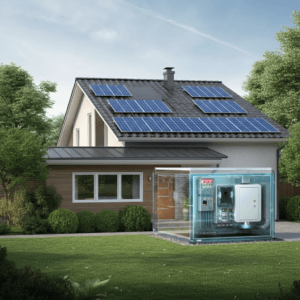
The solar generators of 2025 with Lithium Iron Phosphate (LiFePO4) batteries are more efficient, have a longer lifespan and more convenient features such as mobile app controls and quicker charging. They have improved inverters and MPPT controllers which allow them to capture more energy even during cloudy days. These advances have seen solar generators become a good, long-lasting investment in emergency and recreational use and off-grid living.
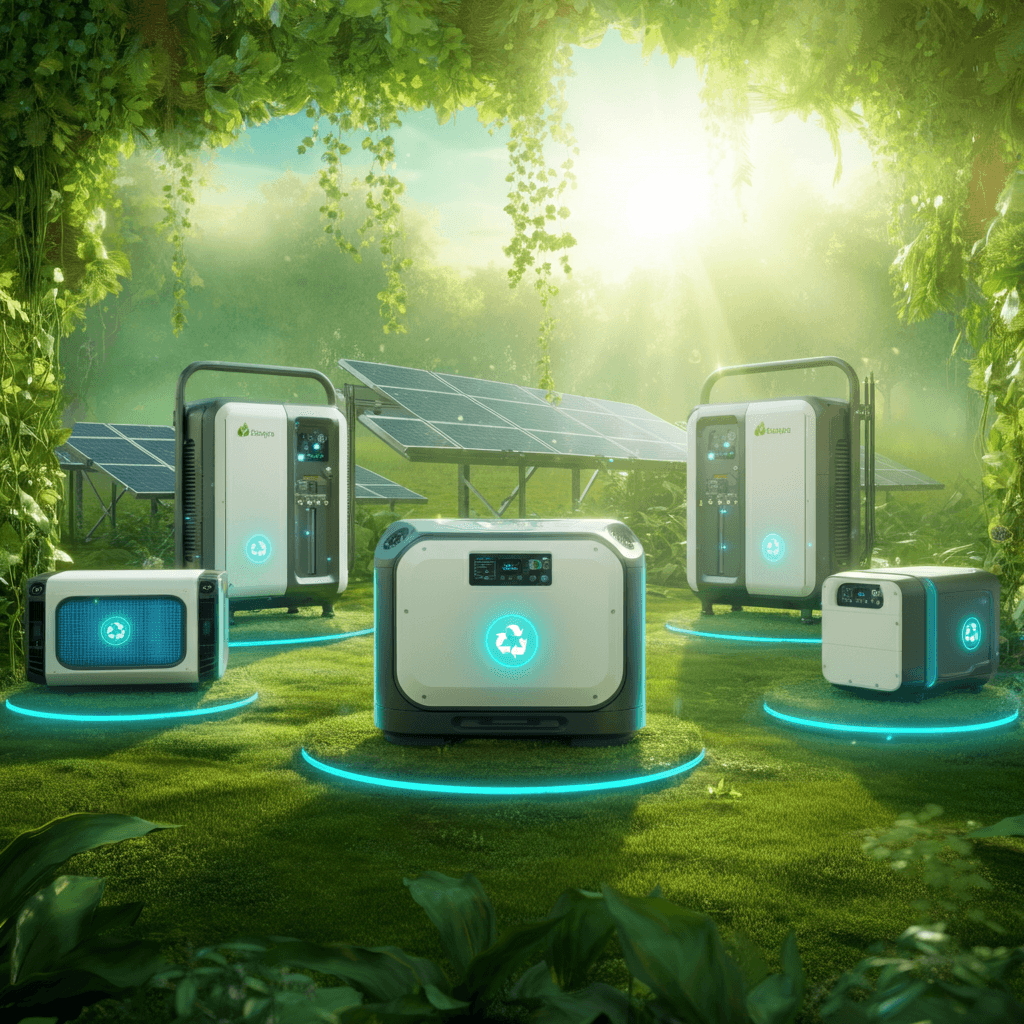
Solar generators are becoming a necessity in contemporary life as the need for reliable, portable, and clean energy increases in the United States. Whether it is keeping the house running during a sudden blackout or charging a device on a camping trip, these devices offer a reliable, environmentally friendly alternative to traditional gas-powered generators. The correct one, however, may be difficult to find. There are so many models available in the market —how do you know which one performs best, offers the best value, and is most reliable?
This is a guide that filters the noise. We have put the best models to the test to give you a conclusive list of the best solar generators in 2025. We will take you through our detailed screening process, offer our best recommendations for different requirements, and provide the knowledge you need to make an informed and confident choice. If you are an experienced prepper, an RV enthusiast, or simply looking for a backup power source, you will find something here.
Our Testing and Review Standards.
We conducted a series of practical tests on each model to identify the most suitable solar generators. We were trying to test them based on what matters to real-life users. We measured each device’s charging rate and the number of appliances that can operate simultaneously.
The following criteria were the focus of our review:
| Criteria | Description |
| Battery Capacity (Wh) | We measured the total energy storage to see how long each generator could power essential devices. |
| Power Output (Watts) | We tested both the continuous and peak wattage to determine if the units could handle high-draw appliances. |
| Charging Speed | We timed how long it took to recharge each generator via solar panels, AC wall outlets, and car chargers. |
| Portability | We assessed the weight, dimensions, and handle design to evaluate how easy each unit is to transport. |
| Port Selection | We checked the number and variety of outlets (AC, USB-A, USB-C, DC) to gauge versatility. |
| Durability & Build Quality | We inspected the materials and construction to ensure each generator could withstand regular use. |
| Value for Money | We compared the features, performance, and price to determine the overall value of each model. |
Top 10 Best Solar Generators in 2025 (Expert Tested)
These are our best solar generators of the year, and we have tried many.
1. Jackery Explorer 2000 Plus
Overview
Jackery Explorer 2000 Plus is a powerhouse, making a statement in high-capacity portable power. It has a modular battery that can be increased to an incredible 24 kWh, making it suitable for any requirement from a weekend outing to a long home power outage.
Key Features:
- Power 2,042 Wh ( expandable to 24 kWh)
- Output: 3,000 W (6,000 W surge)
- Battery: LiFePO4
- Pricing: Solar charging (2 hours and 6 panels)
Pros:
- Huge capacity, which can be expanded.
- Good power output for heavy-duty appliances.
- A durable LiFePO4 battery has a life of 10 years. Ars.
- Fast recharging speeds
Cons:
- Very costly, especially in the case of expansion packs.
- Premium price point
Price Range: $2,199 – $6,499
Best Suited: Home backup and hardcore off-grid customers.
2. EcoFlow DELTA 2 Max
Overview
The EcoFlow DELTA 2 Max is a wonderful combination of power, portability, and fast charge technology. Its LFP battery chemistry ensures performance, and its ability to charge from 0 to 80 percent in less than an hour via AC is a game-changer.
Key Features
- Capacity: 2,048 Wh
- Output: 2,400 W (4,800 W surge)
- Battery: LFP (LiFePO4)
- Charging: 80 percent AC charge in 58minutes.
Pros:
- Industry-leading charging speed.
- Portable because of its capability.
- Long-lasting LFP battery
- Quiet operation
Cons:
- Cooling fans can become noisy under heavy load.
Price Range: $798 – $1,499
Best Suited: RVs, home back-up, and customers concerned with quick recharging.
3. Nature’s Generator Gold Kit
Overview
The Nature Generator Gold Kit is a low-cost, bare-bones system that suits novice solar power users best. It is a reputable manufacturer of a 100W solar panel that is a complete system and can satisfy the minimum power needs.
Key Features
- Capacity: 720 Wh
- Output: 1,800 W
- Battery: Sealed Lead Acid (AGM)
- Included: 100W solar panel
Pros:
- Good price for a complete kit.
- Simple, user-friendly setup
- More pods and panels can be attached.
- Wheels make it easy to move.
Cons:
- The use of advanced battery technology (AGM).
- The lithium models charge more quickly.
Price Range: $899 – $2,529
Best Suited: Budget Buyers and Light-duty emergency backup.
4. Bluetti AC200P
Overview
The Bluetti AC200P has long been a popular solar generator, thanks to its robust construction and numerous ports. It has 17 output ports, therefore capable of supplying a wide variety of devices simultaneously, thereby making it a general workhorse.
Key Features
- Capacity: 2,000 Wh
- Output: 2,000 W (4,800 W surge)
- Battery: LiFePO4
- Ports: 17 ports that have two wireless charging pads.
Pros:
- A huge number of output ports
- Sustainable and long-term performance.
- LiFePO4 batteries have a lifespan of 3,500+.
- Huge, informative LCD screen.
Cons:
- Heavy and bulky
- The AC charging power brick is large.
Price Range: $1,399 – $1,699
Best Suited: Job locations, workshops, and van life.
5. Goal Zero Yeti 1500X
Overview
Goal Zero has been a pioneer in the portable power market, and the Yeti 1500X continues the legacy. It is a sophisticated, reliable generator with a wide range of compatible accessories and solar panels. The mobile application is very controlling and monitoring.
Key Features
- Capacity: 1,516 Wh
- Output: 2,000 W (3,500 W surge)
- Battery: Li-ion NMC
- Connection: Wi-Fi and mobile application.
Pros:
- Remote control application.
- Design and quality construction.Works with other Goal Zero devices.
- Regulated 12 V power outlet for fragile electronics.
Cons:
- It uses a Li-ion NMC battery rather than a LiFePO4 battery.
- Pricier than other comparable spec competitors.
Price Range: $1,499 – $2,099
Best Suited: The technologically advanced users and those who have already invested in the Goal Zero ecosystem.
6. Anker SOLIX F2000 (PowerHouse 767)
Overview
The SOLIX F2000 is the first product that Anker is introducing to the solar generator market, leveraging its reputation for quality charging accessories. It is well designed, with an inbuilt extendable handle and wheels, making it one of the most convenient high-capacity units on the market.
Key Features
- Capacity: 2,048 Wh
- Output: 2,400 W
- Battery: LiFePO4
- Design: “Suitcase” design, handle, and wheels.
Pros:
- Very miniature and yet very portable.
- GaN components with long operating lifetimes.
- Fast recharging times
- 5-year warranty
Cons:
- The handle and the wheels are there, adding weight to the total weight.
Price Range: $949 – $1,848
Best Suited: Customers who need a powerful and mobile solution.
7. Geneverse HomePower ONE PRO
Overview
Geneverse HomePower ONE PRO is advertised as a safe, convenient emergency power supply. It is well-balanced in features, certified as energy-efficient and safe, and this provides one with some degree of peace of mind in case of an outage.
Key Features
- Capacity: 1,210 Wh
- Output: 1,200 W (2,400 W surge)
- Battery: Li-ion NMC
- Safety: 52 reliability and safety tests.
Pros:
- Very convenient to use and navigate.
- Much focus on safety certifications.
- 5-year warranty
- Can charge up to 8 devices simultaneously.
Cons:
- Low capacity and production compared to other models in its price bracket.
- A Li-ion NMC battery has a shorter lifespan than a LiFePO4 battery.
Price Range: (Not Sure)
Best-suited emergency home backup of valuable equipment.
8. EcoFlow RIVER 2 Pro
Overview
EcoFlow RIVER 2 Pro is the undisputable leader in portable power camping and day trips. It is compact, lightweight, and has a very high charging rate —full charge in 70 minutes with a wall outlet.
Key Features
- Capacity: 768 Wh
- Output: 800 W (1,600 W surge)
- Battery: LFP (LiFePO4)
- Weight: 17.2 lbs
Pros:
- Extremely fast charging
- Portable and lightweight.
- Long-life LFP battery (3000+ cycles).
- Great mobile app
Cons:
- Limited use for overnight or multi-day needs.
Price Range: $338- $564
Best Suited: Camping, picnics, and charging little electronic gadgets in the process.
9. Pecron E3000
Overview
Pecron E3000 is a unique product with a massive 3,072 Wh capacity and a fair price. It lacks some of the luxury of the luxury brands, but it can deliver pure, uninterrupted power to the more serious applications.
Key Features
- Capacity: 3,072 Wh
- Output: 2,000 W (4,000 W surge)
- Battery: LiFePO4
- Ports: 16 total outputs
Pros:
- Huge capacity for the price
- Good at operating power-hungry tools and appliances.
- Solid build quality
Cons:
- No mobile application and a simple display.
- Very heavy (77 lbs)
Price Range: $999 – $3,795
Best Suited: Cabins not on grid, and as a high-capacity, low-cost backup.
10. Zendure SuperBase V
Overview
The first plug-in home energy system using semi-solid-state batteries, the Zendure SuperBase V, offers greater energy density and enhanced safety. It is one of the most innovative systems on the market, thanks to its modular design and dual-voltage output (120 V/240 V).
Key Features
- Capacity: 6400 Wh (upgradeable to 64 kWh)
- Output: 3,800 W (expandable to 7,600 W)
- Battery: Semi-Solid State
- Voltage: 120V/240V dual voltage
Pros:
- Radical semi-solid-state battery technology.
- Dual-voltage output is used to serve large home appliances.
- Motorized wheels make it easier to transport.
- Voice recognition and advanced application integration.
Cons:
- Very expensive
- Quite heavy, difficult to carry.
Price Range: $4,599+
Best Suited: Whole-home backup and tech lovers who want the latest technology.
The Issue of Choosing the Appropriate Solar Generator.
There are many good options, and the best solar generator for you is the one that meets your needs. Here is how to find a model that suits you.
| Use Case | Key Features to Look For | Recommended Models |
| Home Backup | Large capacity (2000Wh and above), large power output (2000W and above), modularity, and quick AC charging. | Jackery Explorer 2000 Plus, Zendure SuperBase V |
| RV/Van Life | In-between to high (1500-3000Wh), charging in a variety of options, controlled 12V port. | EcoFlow DELTA 2 Max, Bluetti AC200P |
| Camping | Portable (less than 30 lbs), plenty of ports to charge small gadgets, and rapid solar charging. | EcoFlow RIVER 2 Pro, Goal Zero Yeti 1500X |
| Budget | Ready-made, including panels, enough power to do the essentials, and easy to use. | Nature’s Generator Gold Kit, Pecron E3000 |
The Future of Solar Generator Technology
The solar generator technology is developing at a high pace. By 2025, the industry standard will have become Lithium Iron Phosphate (LiFePO4) batteries, which can last up to 10 years of normal operation – a radical change compared to the older types of battery.
Other key trends include:
- Quick Charging: Developments enable the complete charging within approximately an hour using an AC outlet.
- Smart Control: Mobile apps are the new norm, and they allow users to have a remote control over power output and more specific information on battery health.
- More Efficiency: Improved inverters and MPPT controllers imply that more energy from the sun is stored and saved even on cloudy days.
The upgrades render 2025 models more efficient, lasting, and user-friendly than ever.
Solar Generators Frequently Asked Questions.
Solar Generators Frequently Asked Questions
Is it possible to power the home with a solar generator?
A large solar generator (such as the Jackery Explorer 2000 Plus or Zendure SuperBase V) can supply power to key home appliances such as a refrigerator, lights, and medical equipment during a power outage. But the majority of single units are not able to supply a complete home with central AC. Expandable systems are able to approach the whole-home coverage.
What is the lifespan of solar generators?
Life will be dependent on the battery chemistry. LiFePO4 (LFP) battery models can be charged up to 3,000-4,000 times or about 10 years of frequent operation. Li-ion NMC or lead-acid battery models used in older models have a typical cycle life of 500-800.
Are they worth buying in 2025?
Absolutely. As the grid becomes less and less stable and the cost of fuel is rising, a solar generator is a smart purchase. They are clean, quiet, and free after the initial purchase, hence they are useful during emergencies, recreation, and off-grid living.
What is the difference between the solar and dual-fuel generators?
Solar generators are powered by batteries that are charged by the sun or power outlets. They do not produce any noise, they are not harmful to the environment, and can be used indoors. Dual-fuel generators use propane or gasoline, are noisy, emit toxic fumes, and can be utilized outdoors.
Our Final Recommendations
A solar generator is a big purchase, yet the one that fits the needs will give priceless energy security and a sense of mind. These three models are unique in a crowd based on our comprehensive research.
- 🏆 Best Overall: Jackery Explorer 2000 Plus — The most versatile and future-proof generator in the market is the Explorer 2000 Plus, which has an expandable ecosystem, powerful output, and rock-solid reliability.
- 💰 Best Value: Nature Generator Gold Kit– This is a complete all-in-one kit that gives you all you need to start with solar power without exceeding the budget.
- 🌿 Best to Camp: EcoFlow RIVER 2 Pro – The lightweight design and rapid charging features of the product make it the perfect companion for any outdoor adventure.