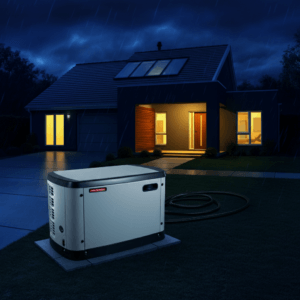
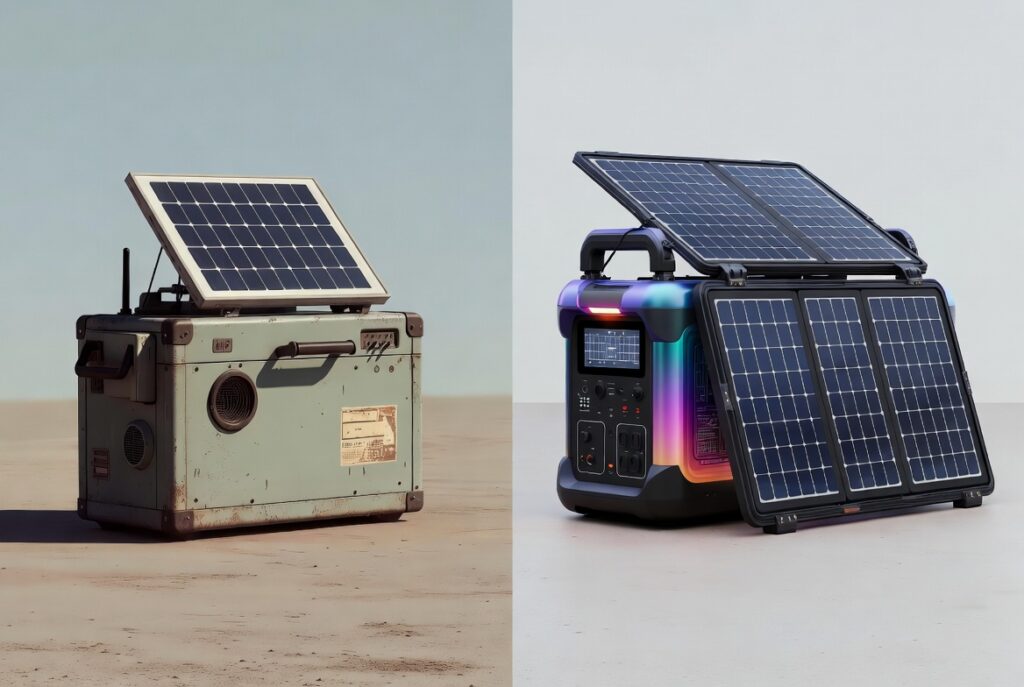
These solar generators have come a long way from the days when they could only charge their phones and laptops at a campsite. These devices are already serious competitors to home power, with enormous advances in battery capacity, solar input rate, and size.
The features of the new models trickling into the market in 2025 were not even considered for portable power stations. The issue the homeowner who wants to be energy-independent, or who has a good emergency backup, will face with this technological development is whether existing solar generators have enough power to serve a whole house.
The guide will address the potential of modern solar generators, what they require to power an average house, and whether they are a solution to your energy needs.
Solar Generator for domestic power.
We cannot answer whether you can use a solar generator to power your home without understanding how they work and what makes the various systems different.
Basic Construction Materials and Process.
In essence, a solar generator is a one-unit power station. It is subdivided into three large parts:
Electric energy is stored in a massive battery.
The battery’s direct current (DC) is converted to alternating current (AC) by an inverter, which is then used by your home appliances.

A charge controller is a device that regulates the amount of power flowing into the solar panels so the battery is charged safely and efficiently.
The system has been connected to solar panels that collect sunlight, convert it into electricity, and store it for future use.
The Portable and Whole-Home Systems Difference.
The campsite can use a standard portable solar generator to power some essential appliances. They are much more powerful, though. They are usually modular and can be combined with additional battery packs to increase storage capacity. They also have more powerful inverters capable of meeting a house’s high electrical demands.
Why Power Demand Matters
The quantity of power that you can generate in your home with a solar generator will all depend on the amount of power that your household needs. This is approximated in kilowatt-hours (kWh) and watts (W). The battery size (kWh) you require in your generator must be large enough to store sufficient energy, and the inverter must be robust enough (W) to run your appliances simultaneously.
Being aware of Home Energy Requirements.
The first step is to understand your homeowner’s usage before deciding whether a solar generator is the right solution for you.
The US domestic power consumption is mediocre.
In American residential buildings, the power consumption is approximately 25-30 kilowatt-hours (kWh) of electricity per day. This number can vary widely depending on how big your house is, the weather where you live, and your daily activities.
Key Power-Hungry Appliances
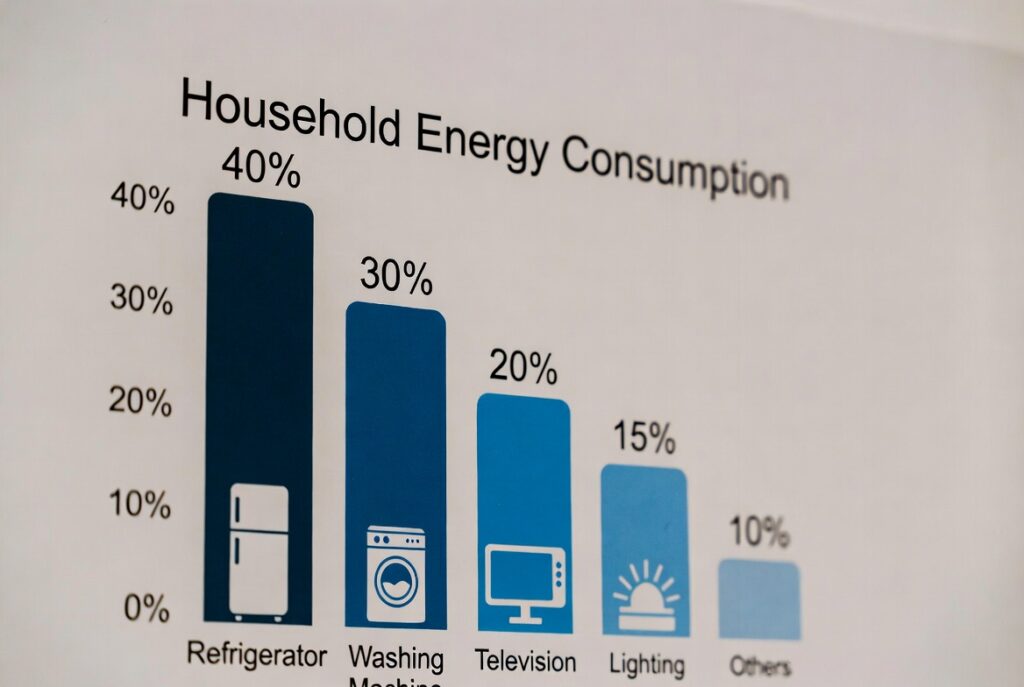
Some appliances have high power. The normal household is the largest consumer:
- Heat- ventilation-air conditioning (HVAC).
- Refrigerators and freezers
- Water heaters
- Washers and dryers
- Ovens and stovetops
Constant and Maximum Power Demand.
The distinction between continuous power and peak power (or surge power) should be known. Continuous power is the power an appliance consumes while operating. Peak power is the extra wattage a motor- or compressor-driven appliance needs to start in a couple of seconds. These power spikes at the start should be handled by the solar generator, which should have an enormous surge capacity.
Calculating Total Load
Enter the wattage of the appliances you plan to use to calculate your needs. For example:
- Refrigerator: 200W
- LED Lights (x10): 100W
- Wi-Fi Router: 10W
- TV: 150W
- Total: 460W
You would need at least a 460-watt generator somewhere. It would take a battery with a capacity of 4.6 kWh (460W × 10 h = 4,600 Wh) to power them for 10 hours.
The future of Solar Generators in 2025.
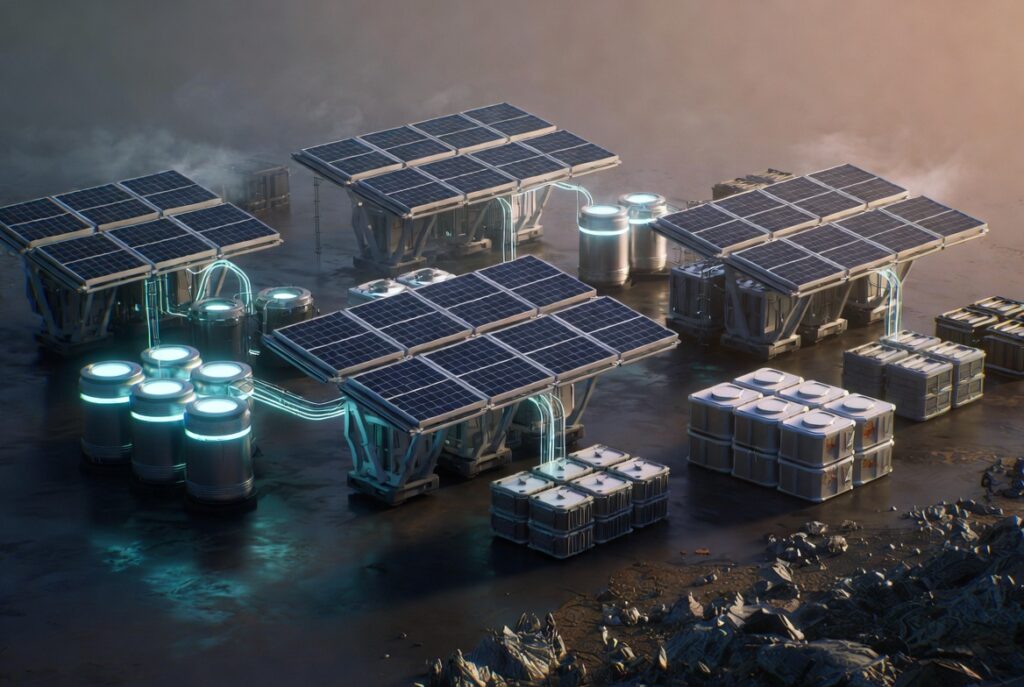
Looking ahead, consider what 2025 has in store for solar generators. Designed to support home backup, its potential is stronger and more viable than ever.
A report on the emerging solar generator manufacturing.
Some of the brands leading the market in high-capacity systems are EcoFlow, Bluett, i, and Nature Generator. The flagships they will possess in 2025 will deliver thousands of watts of long-term power and tens of thousands of watts-hours of storage, and will be convenient enough to serve beyond requirements.
Increase in Battery and Scalability.
Among the most significant game-changers is modularity. Most new systems can be stacked into battery packs. The base unit can be expanded with additional batteries at the appropriate time, when you need them or when you have the money. This allows the expansion of one system from the vital circuit to whole-house power.
Solar Recharging and Improvements.
The new generators can support much larger solar arrays that recharge much faster. The technology is MPPT (Maximum Power Point Tracking), which leverages the fact that solar power delivers maximum output to draw as much power as possible from your panels, even in less-than-ideal conditions. Most of them also offer the option to charge from a wall outlet and solar power simultaneously for even faster charging.
Electrical panels in the house can be combined.
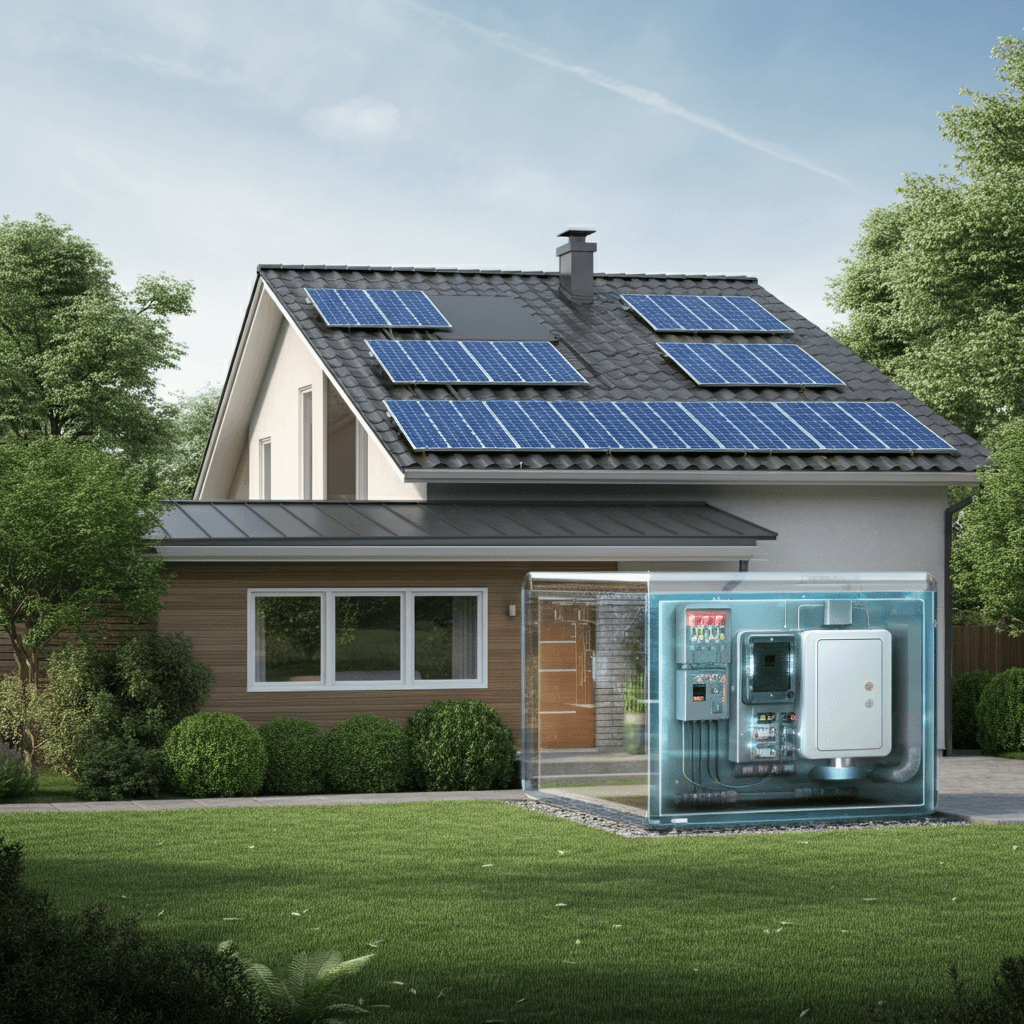
It is now possible to have sophisticated solar generators that can be hard-wired. Advancements are not limited to energy storage: electrical panels in the house can now be combined with solar generators for seamless integration. sfer switch or hard-wired into a smart home panel. This allows the generator to automatically turn on when the grid goes down, providing you with uninterrupted power to circuits of your choice or to the entire house.
Will they be able to propel a whole house?
The big question then is whether you can use one of them to power your entire house. With these features in mind, will these solar generators be able to propel a whole house? Nth Backup and Full-time operation.
Most solar generators in the 2025 generation can power a complete homestay during a short-term emergency, such as a power outage. On the contrary, it is one thing to run a Home 24/7 off-grid. It must have an enormous battery pack and an enormous solar panel to ensure that it is charged and not accessible to everyone.
Solar Generator + Grid + Panels Hybrid Systems.
The most sustainable system for most people is a hybrid system. The solar generator will be used in this instance, with the rooftop panels and the grid. It stores excess solar energy for use during peak hours or when power is off, saving you on the grid and on your electricity bill.
Example Scenarios
Small home (uses 1-2 kWh/day)Small Home (uses 1-2 kWh/day)Homesolar generator with a 5-10 kWh battery capacity may be used for this house, especially when solar power is sufficient.lar generator will allow providing a partial backup of the needs, including the fridge, lights, internet, and medical equipment, for a more extended period of time. There is a possibility that the use of appliances to run the whole house should be controlled.
Large Home: This will require a complete system with multiple expansion batteries and many solar panels to power a large home.
Real-World Limitations
Concrete restrictions will be taken into consideration. Depending on the weather, the number of panels you have and their efficiency, as well as the original cost of the batteries, the amount of energy you will produce will vary. To weigh the costs and the benefits.
Wholesale Generators Price Range.
A solar generator system capable of powering the whole house as an alternative source can cost between 3000 and 10000, or even higher. The final price will be based on the brand, battery capacity, and inverter size.
Setup and Installation
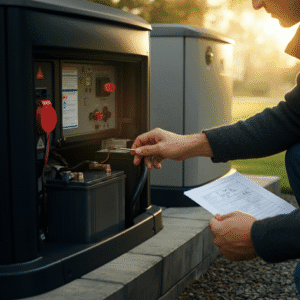
Even though you only need to plug the generator into your home’s electrical panel, a transfer switch should be installed professionally to meet safety and code requirements. Solar generators are also very cost-effective in the long run as compared to traditional gas generators. They use no fuel, require low maintenance, and do not discharge anything into the air; thus, they are environmentally friendly.
Substitutes and Compliments.
Otherwise, you may be energy-independent in other ways if one system is not appropriate. If a single system does not meet your needs, consider substitutes and complements for energy independence.Partnering with Rooftop Solar + Battery Store.
A good backup that has rooftop solar installed and can be used when your primary battery system is unavailable, or as a second backup, is a solar generator.
To augment Multiple Units to Long-lasting Power.
The cascaded other brands can be doubled to provide you with twice the power output and storage capacity.
Hybrid Dual-Fuel Dual-Hybrid Solar + Gas or Hybrid.
A hybrid system of a solar generator and a conventional gas or dual-fuel generator will provide the best of both worlds to the individual who needs a dependable backup that is a clean, noiseless power supply during the greater part of the time, and a gas-powered backup in the event of extended power outages or adverse weather.