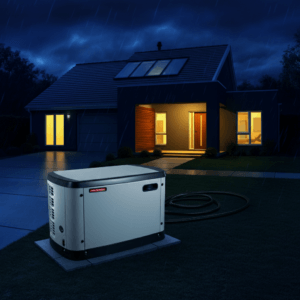
Discover the top 2025 dual fuel generators to use in camping and provide flexibility, portability, and quietness. These generators use both gasoline and propane, ensuring you have power to continue your outdoor activities. Our guide has the best models, important features, and safety tips. This will help you have a better camping experience with a reliable, eco-friendly power source. Table of Contents
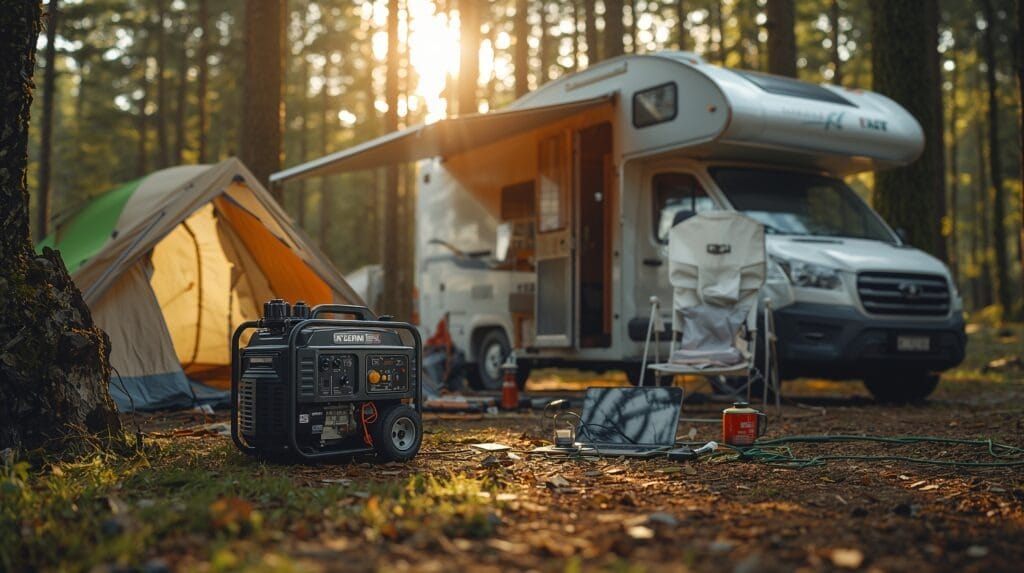
Going out into the wild does not imply that you have to leave every comfort of Home. Many campers need a reliable fuel source, whether to charge their phones, run a small heater, or use a portable cooktop. While you can use regular portable power station, a dual-fuel standby generator is more flexible and convenient. This makes it a popular choice for camping.
Dual-fuel generators operate on two fuels: gasoline and propane. This flexibility will ensure that you do not go without power outages. Should you run out of gasoline, you can change to a propane tank. This versatility, along with other advantages such as reduced emissions from propane use, makes them a brilliant investment for any serious camper.
In this guide, you will be taken through all the information you need to know when selecting the ideal dual-fuel generator to use in camping. We will discuss the key features to consider, review the best generators on the market, and provide recommendations for using your generator safely and properly.
Key Features in a Camping Generator
Not every generator is produced on the same level. These are the main features to consider when choosing the right dual-fuel model for your camping activities, so you end up with a unit that suits you.
Power Output and Wattage
The most critical factor is the generator’s power output. We measure this in watts.
- Starting Watts: The additional power required to start large, power-hungry appliances or tools with motors.
- Running Watts: The power continuously supplied by the generator.
Consider what you will need to power simultaneously. A small portable generator (approximately 2,000 watts) is very useful for charging phones and laptops and powering some lights. When you intend to use an electric skillet, coffee maker, or small air conditioner, you will need a model with a higher wattage, likely 3,000-4,000 watts.
Portability and Weight
This generator will be carried to and from your campsite, so it must be portable. Find models with built-in handles and strong wheels. Take special care of the weight. Smaller, lighter units are easy to carry and store, which is a major plus when loading your car for a trip.
Noise Level
Campsites are supposed to be tranquil. The noise of a loud portable inverter generators will disturb the peace and annoy your neighbours. Noise levels are measured in decibels (dBA). A generator with a 50-60 dBA rating is considered quiet, about the same as an everyday conversation. Inverter generators are generally significantly quieter than traditional ones and are often preferred for camping.
Fuel Efficiency and Run Time
A fuel-efficient generator will save you money and reduce the frequency of refueling. Determine the runtime on a full tank of gas or a standard propane tank, per the manufacturer’s specifications. An extended runtime at 25 per cent or half load implies you have more time in the long term.
Outlets and Receptacles
Make sure that the generator contains the correct types of outlets for your devices. They will all have standard 120 V household receptacles. Still, some are also equipped with USB receptacles for charging electronics directly, and larger RV-ready receptacles (such as a TT-30R) for powering a camper.
These are our best choices for dual-fuel generators suitable for a wide range of camping applications.
1. Champion 3400-Watt Dual Fuel Inverter Generator.
Best All-Around Performer
Campers love the Champion 3400-Watt due to its popularity. It is perfectly balanced in terms of power, portability, and silent operation. It has a starting power of 3400 watts and a running power of 3100 watts, which is sufficient to run most RV essentials, such as a 13,500 BTU AC unit.
Key Features:
- Noise Operation: It has a noise level of 59 dBA at 23 feet, which will not disturb the tranquillity.
- RV Ready: includes 120 V 30A RV outlet, two household outlets, and a 12V DC outlet.
- Long Run Time: Runs to 7.5 hours on a full fuel tank of gasoline or 14.5 hours on a 20 20-pound propane tank.
- Clean Power: As an inverter generator, it produces clean power for sensitive electronics such as laptops and smartphones.
It is not the lightest one, but it has built-in wheels and a handle, which allows it to be moved within the camp.
2. Westinghouse iGen4500DFc
To the fullest Power and Convenience.
The Westinghouse iGen4500DFc is an excellent choice when you want more power without compromising modern conveniences. It has a powerful 4500 starting and 3700 running watts, making it capable of powering virtually any RV appliance.
Key Features:
- Push-Button and Remote Start: You can operate the generator remotely with the included key fob, or press a button to start it.
- Very Quiet: The lowest power setting is 52 dBA, one of the lowest power levels among high-power generators.
- Digital Display: Displays the remaining runtime, power output, and fuel level.
- Extraordinary Run Time: It features a 3.4-gallon fuel tank with up to 18 hours of runtime.
This heavier unit is surprisingly easy to maneuver, thanks to the telescoping handle and never-flat wheels.
3. WEN DF475T Dual Fuel Generator
Best Budget-Friendly Option
The WEN DF475T is a cost-effective option for campers who do not want to spend too much money on a reliable power supply. It delivers 4750 kW starting power and 3800 kW running power on gasoline, providing ample power at a very affordable cost.
Key Features:
- Strong Engine: The 224cc 4-stroke engine delivers sufficient power to handle everyday needs and even larger appliances.
- Electric Start: Has an easy-to-turn key-electric start.
- Several Outlets: Two 120 V domestic outlets, a 30A RV outlet, and a 12 V DC outlet.
- Good Run Time: Can run for up to 11 hours at half-load on its 4-gallon gasoline tank.
Though it is heavier and noisier than inverter models, its raw power and low cost make it an excellent generator for camping trips where noise is not a significant issue.
Tips for Using Your Generator Safely
Operating a generator requires care. Follow these tips to ensure you and your fellow campers stay safe:
- Proper Ventilation is Key: Never run a generator inside a tent, RV, or any enclosed space. Generators produce carbon monoxide (CO), a colorless, odorless gas that can be fatal. Place it at least 20 feet away from your campsite, with the exhaust pointing away from people.
- Use a Carbon Monoxide Detector: Always have a battery-operated CO detector in your tent or RV as a crucial safety backup.
- Refuel with Caution: Turn the generator off and let it cool completely before refueling to prevent a fire.
- Keep it Dry: Protect your generator from rain and moisture. Use a generator tent or canopy, but ensure there’s still plenty of ventilation.
- Use Heavy-Duty Extension Cords: Use outdoor-rated extension cords that are appropriate for the load you’re running to prevent overheating.
Power Your Next Adventure
A dual-fuel generator is an empowering tool for any camper. It offers the flexibility to use either gasoline or propane, ensuring you have a reliable power source for all your needs. Whether you choose a quiet inverter like the Champion 3400-Watt for its peaceful operation or a powerful workhorse like the WEN DF475T for its value, you’re investing in more comfortable and convenient outdoor experiences.
By considering your power needs, desired noise level, and portability, you can find the best camping generator that will enhance your trips for years to come. Pack smart, stay safe, and enjoy the freedom of having power wherever you go.