
Choosing the right solar generator in 2025 can feel daunting—quick tech growth and a new influx. Brands and models make the decision more complex than ever.
While the increase in choices benefits consumers, it can also be confusing. Deciding which brand to choose becomes difficult when all options are reliable and provide clean power.
These three brands differentiate themselves in the market: Jackery is known for portability and ease of use, EcoFlow for advanced technology and modular design, and Nature’s Generator for heavy-duty home backup and high capacity.
Each brand fills a specific market niche: Jackery is best for lightweight, portable options; EcoFlow focuses on high-tech features such as fast charging and expandable systems; Nature’s Generator serves users needing robust, stationary power solutions for full-home backup.
These three brands share some significant similarities and differences, which we will compare in the following article to help you determine which best fits your home, RV, or camping needs.
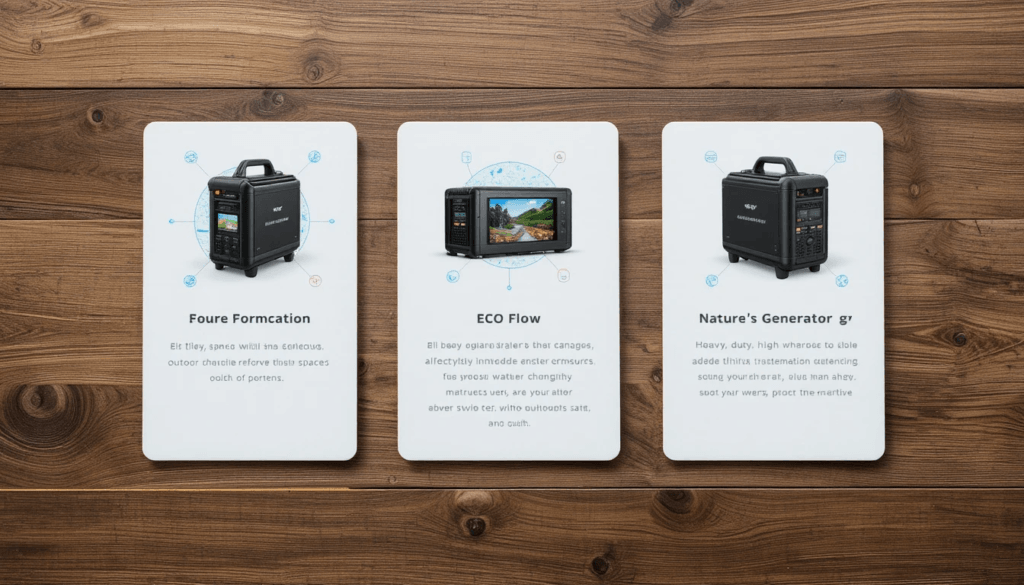
The Quick Profiles Brand Overview.
Jackery
Jackery was established in California in 2012 by a former Apple battery engineer. The brand emphasizes trustworthy, convenient power solutions for outdoor enthusiasts. Jackery’s products appeal to campers, hikers, and individuals who need simple, portable power off the grid. Key features include portability, an intuitive user interface, and usability for both beginners and experienced users.
EcoFlow
EcoFlow was founded in 2017 with a mission to transform access to energy. The brand is recognized for its innovation, particularly with X-Stream fast-charging technology and modular, expandable ecosystems. EcoFlow products cater to tech-savvy users who prioritize high performance, scalability, and advanced features. These units can expand as users’ needs grow, serving both campers and those requiring substantial home backup.
Nature’s Generator
Nature’s generator adopts a different strategy by targeting the heavy-duty home backup and off-grid living markets. These systems are designed for high capacity and durability, featuring robust construction that can power an entire home during outages. Nature’s Generator appeals to users seeking maximum power and long-term reliability for stationary, rather than portable, use.
Factors of comparison (What to look at)
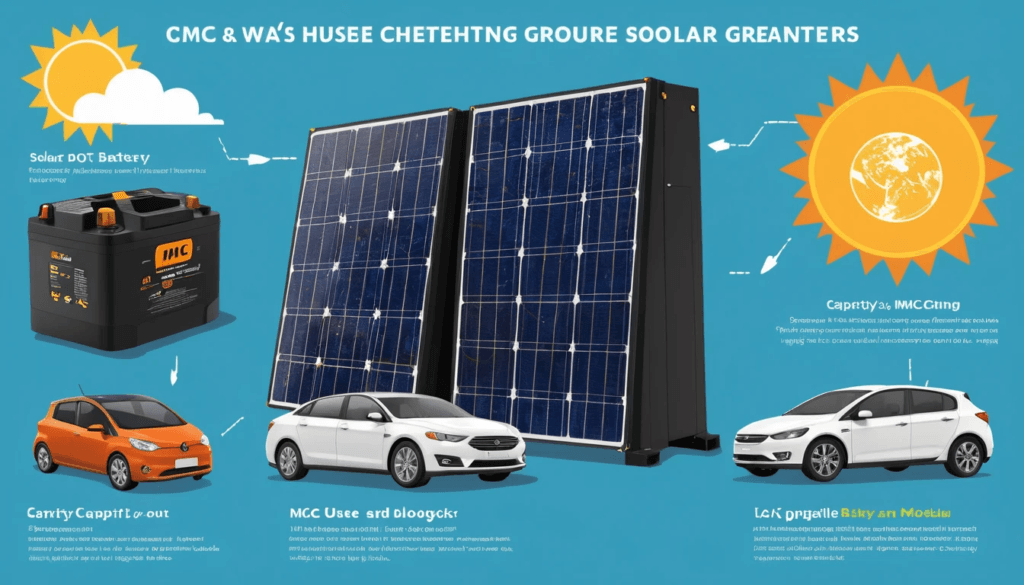
When buying a solar generator, focus on capacity, output, battery type, portability, charging, expandability, and value.
Capacity & Output
Capacity (Wh) is stored energy. Higher Wh means longer runtime; 1000 Wh runs a 100W device for 10 hours.
Output (W) is the total power output of the devices. Surge capacity briefly starts large appliances.
Jackery’s lineup ranges from lightweight, portable models like the Explorer 240 (256Wh), ideal for outdoor use, to larger, stationary-capable models like the HomePower 3600 Plus (3584Wh). EcoFlow’s DELTA series starts at about 1024Wh and offers models with expandable capacity for users needing more flexibility. Nature’s generator specializes in high-capacity systems meant for heavy-duty, stationary backup power.
Battery Chemistry & Lifespan
Battery type affects lifespan and safety.
LiFePO4 batteries last 2,500–4,000+ cycles, offer safety, and good thermal stability. Most new EcoFlow and Jackery models now use this.
NMC batteries are lighter, last 500–800 cycles, and are found in some older or smaller Jackery models.
A longer cycle life means your investment lasts for years; LiFePO4 is suitable for most users.
Portability & Form Factor
Your intended use determines the needed portability.
For camping, prioritize lightweight models (under 30 lbs/13.6 kg) with handles.
For home backup, weight matters less; robust units may have wheels for more effortless movement.
Jackery specializes in ergonomic, portable units. EcoFlow’s higher output makes some units heavier but still portable. Nature’s generator is the heaviest and is designed for stationary use.
Charging & Expandability
Recharging Method: Charging speed impacts usability as much as capacity does.
Solar Charging: Higher solar input (watts) means faster charging.
AC/Car Charging: All offer wall and car charging. EcoFlow’s X-Stream tech charges some models 0–80% in under an hour via AC.
Expandability: EcoFlow and Nature’s Generator support adding battery modules to increase capacity several times.
Ecosystem, Support & Value
Consider the brand as a whole.
Warranty & Support: The longer the warranty (usually 2-5 years), the more the manufacturer believes in its product—feedback checks customer service responsiveness.
Ecosystem: Find a wide range of compatible accessories, including solar panels, expansion batteries, and carrying cases.
Price vs. Performance: Divide cost by Wh to compare real value, not just price tags.
Comparison of Brands Head to Head.
Jackery Strengths and Weaknesses.
Strengths:
- User-friendliness: Easy-to-use, user-friendly interface.
- Excellent portability: lightweight, ergonomic design.
- Quality: A brand with a good history.
Weaknesses:
- Slower Charging: AC and solar power charging speeds are generally slower than those of EcoFlow.
- Poor Expandability: Most models have a fixed capacity.
- Elderly Battery Tech in Certain Models: Even entry-level units use NMC batteries.
EcoFlow- Strengths and Weaknesses.
Strengths:
- Fast Charging: AC charging speeds that are the best in the industry using X-Stream technology.
- High Power Output: It can operate high-powered appliances.
- Scalable Ecosystem: The design is modular, allowing capacity to be upgraded.
Weaknesses:
- More Expensive: More sophisticated features are usually priced higher.
- Weight: It may be heavier than similar Jackery models.
- Complex for Beginners: Not all users can deal with the number of features.
Strengths and Weaknesses of Nature’s Generator:
Strengths:
- Massive Capacity: Made to support the serious needs of home backup power.
- Heavyweight and Scalable: Strong construction and great expansion opportunities.
- Good in Off-Grid: Can be incorporated as a permanent power system.
Weaknesses:
- Ineffective Portability: This is very heavy and huge; it cannot be carried around.
- Delayed Charging: Mimics the fast-charging technology of other companies.
- Greater initial Investment: This is more expensive in most cases since it is large.
What Brand is Best in What Use Case?
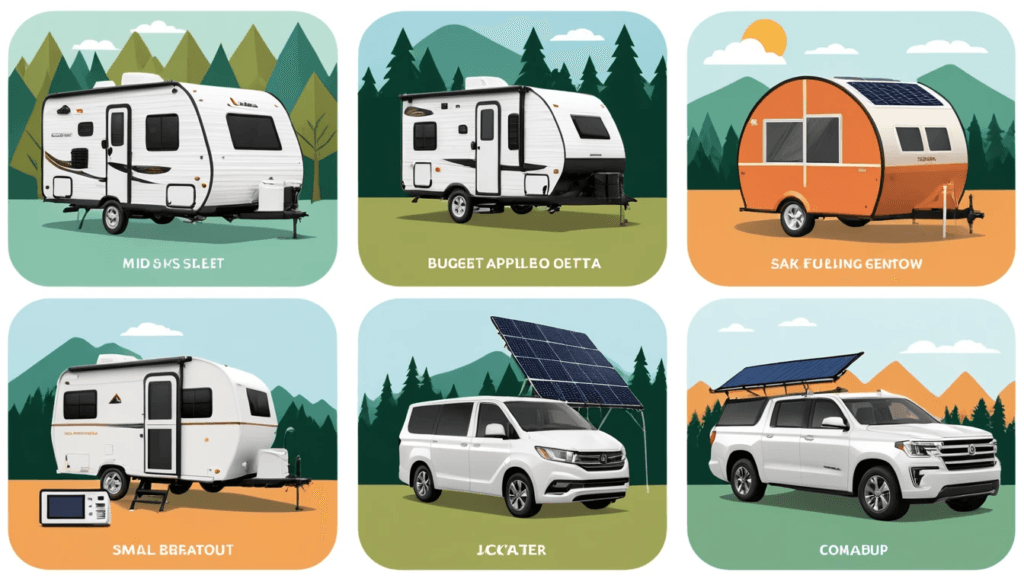
Camping & Outdoor Use
Jackery is the clear winner in this case, particularly with its Explorer series. They are ideal on the weekend because of their light weight, ease of use, and durability. The EcoFlow RIVER series models are also perfect, with the smaller ones charging very quickly despite their small size.
RV & Mobile Living
In RV life, you need a balance of power, portability, and quick solar charging. EcoFlow is a leader in this category. Models such as the DELTA series can operate RV appliances and recharge quickly with large solar arrays. Bigger Jackery models are also available, but EcoFlow’s flexibility makes it better for long-term travel.
Home Backup Scenarios and Whole-House Backups.
The power goes off, and you need a lot of capacity and output. Nature Generator is designed to do this, and it provides scalable systems capable of operating the necessary home circuits for extended periods. Whole-home backup is also best achieved with high-end EcoFlow DELTA Pro systems, which can support multiple expansion batteries.
Budget vs. Premium Options
- Affordable: For basic power needs, an entry-level Jackery model is the most affordable and reliable option.
- Mid-range: Competitors include EcoFlow and Jackery’s mid- to high-end models. Select Jackery because of simplicity, or EcoFlow because of more functions and expansion.
- Premium: Nature Generator and the full-fledged EcoFlow DELTA Pro are the highest-quality offerings in the category for those who require the full power and can afford it.
Conclusions and Recommendations.
No single brand of solar generators is the best – the right one is the one that fits your needs.
Select Jackery for outdoor adventures when ultimate portability and simplicity are required.
Select EcoFlow for quick charging, great power, and a flexible, expandable system.
Select the Generator of Nature with the best capacity and a strong backup system for the home.
The first and most significant will be to evaluate your power needs and how you will utilize your generator. With a clear idea, you can also be sure you’ve chosen a brand and model that suits your lifestyle.
Ready to dive deeper? You can find your ideal power solution at myelectricgenerators.com, with detailed reviews of specific models for each brand.
Generally, no. Although you may occasionally use third-party panels with an adapter, it is preferable to use panels of the same brand as your generator to ensure compatibility, safety, and the maximum charging speed.
The brand and model will be typed. EcoFlow and Nature Generator are reputed to offer expandable systems. The majority of Jackery models are fixed-capacity and cannot accept external batteries.
The three brands offer good warranties, typically 2 to 5 years. Customer service experiences may vary, and it is prudent to read the latest reviews and visit forums to learn what people think of the company before buying the product.
Put your first application first. Portability is essential when hiking or camping. When buying a generator to back up your house or an RV, it is better to choose a higher-capacity, higher-power model, even at the expense of weight.