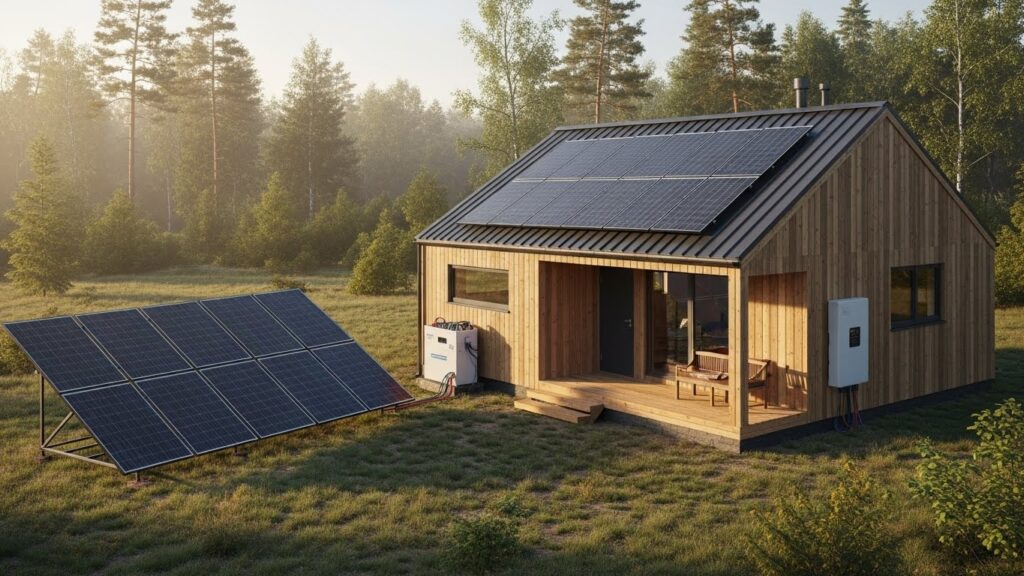
Staying in an off-grid cabin offers independence and connection to nature. To make the most of your retreat, you need a reliable solar power package—including a battery, panels, an inverter, and necessary wiring—for self-sufficient energy.
The world of solar generators is changing fast, bringing exciting new options for powering your cabin.
Cabin owners in 2025 benefit from safer, longer-lasting LiFePO4 batteries (Lithium Iron Phosphate batteries, known for safety and durability), faster charging from higher solar input (more solar panel power lets you recharge batteries faster), and modular designs that expand as needed (add more batteries or panels over time).
This guide will walk you through finding the perfect solar generator package for your off-grid cabin. We’ll talk about what matters most, showcase the top five choices, and guide you toward a setup that matches your unique retreat.
When you’re picking the best solar power package for your off-grid getaway, a few key features can make your life easier. Storage capacity (in watt-hours or kilowatt-hours) shows how much energy you can store, so a bigger battery means you can use more devices for longer. LiFePO4 batteries are a smart pick for cabins, offering thousands of charge cycles and greater safety than alternatives. The proper setup will keep your cabin running through both sunny and cloudy days.
Check the inverter’s output and compatibility. The inverter is the device that converts DC (direct current, produced by solar panels and stored in batteries) into AC (alternating current, used by most home appliances).
The inverter converts your battery’s DC power into the AC power your cabin devices need. Make sure its watt rating is high enough for everything you want to use at once. Check both continuous (steady use) and surge output (brief spikes, like those from fridges). Pick a model with the right outlets for all your gear so your installation goes smoothly and everything connects easily.
Plan for future growth and expandability.
Your power needs might go up down the road. Choose a system that lets you easily add more battery capacity or solar panels as your cabin life evolves. This way, your investment grows right along with your plans.
Real-World Conditions
Finally, take a good look at your local environment. Your cabin’s location, daily sunlight, weather, and energy use all affect which bundle is right for you. An excellent system for sunny Arizona may not suit a forested northern hideaway. Review the recommended solar generator packages for powering an off-grid cabin.
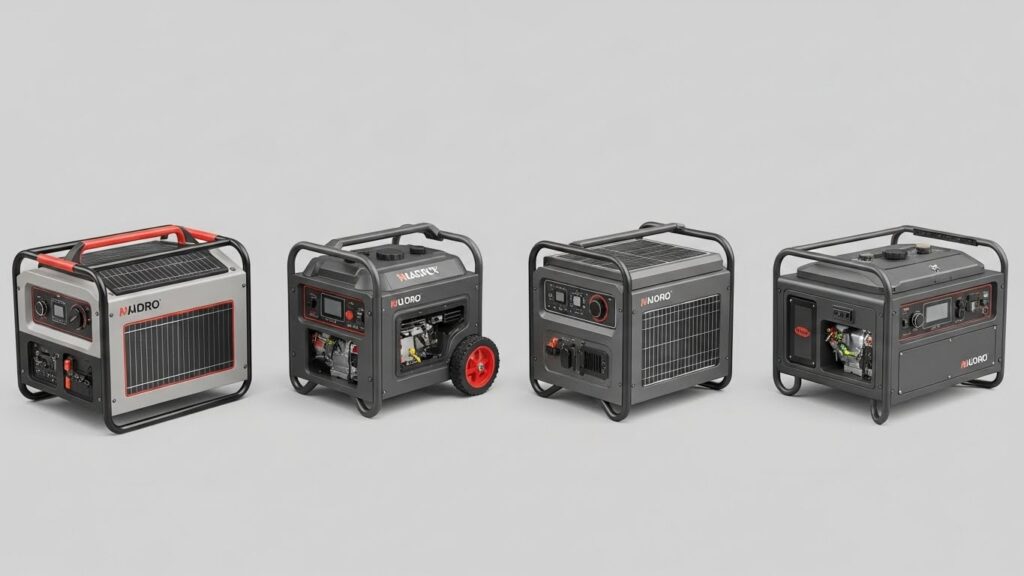
Bundle 1 – Compact Starter Cabin System.
This package applies to small cabins with 1-2 rooms, used for a weekend getaway. It is strong enough to turn on lights and charge devices, and power a small fan.
What makes it interesting: It is a low-priced, complete package that installs easily, making it suitable for individuals new to solar power.
- Notable Specifications: 1kWh LiFePO 4 battery, 400W of solar input, 1,500W of inverter.
- Benefits: saves costs, travels easily, and installs quickly.
- Drawbacks: Low capacity; cannot run large appliances.
Bundle 2 – Mid-Size Cabin Bundle
It is a bundle that is more frequently used and can comfortably power a small refrigerator, lights, a laptop, a tablet, and a small heater or fan.
Why it’s a smart pick: This bundle strikes a nice balance between price and capacity. You’ll enjoy the essentials for comfort without overspending.
- Necessary Specifications: 2.5kWh (2,500 watt-hours) LiFePO4 battery, 800W (watts) solar input, 2,200W inverter output (supports up to 2,200 watts of AC power for your appliances).
- Pros: Good power-to-price ratio, will run a small refrigerator.
- Cons: May not be able to run multiple high-draw appliances simultaneously.
Bundle 3 – Larger Cabin Bundle
This package is suitable when you have a cabin as your usual getaway and need to use more than one appliance, including bulky devices like a coffee maker or a microwave.
Why it is special: It features an upgradable battery and a high inverter output, enabling it to adapt to rising energy demands.
- Principal specifications: 4kWh (4,000 watt-hours) expandable LiFePO4 battery, 1,200W (watts) solar input capacity, and a 3,000W inverter (can provide 3,000 watts of AC power to appliances).
- Pros: Handles large outputs and powers the most popular appliances.
- Weaknesses: It is more expensive to purchase, large, and heavy.
Bundle 4 – High-Capacity Bundle
This package is for those seeking near-total cabin autonomy. It can power most home appliances, making your off-grid cabin feel like a regular house.
Why it is special: This system is extremely large-scale and receives substantial solar input, making it well-suited for serious, long-term off-grid living.
- Notable Specifications: Expandable LiFePO4 battery (6kWh or 6,000 watt-hours and up), solar input (2,000W or more), 4,000W inverter (can power appliances requiring 4,000 watts at once).
- Pros: Mega capacity, high-speed to recharge, and is compatible with nearly everything.
- Cons: It is expensive to invest in and complex to install.
Premium Customizable Bundle, Bundle 5.
To achieve maximum flexibility, this modular bundle lets you build a system that perfectly suits your needs and add components one at a time.
What makes it unique: It uses the highest-quality parts and is fully modular. You can start small and upgrade to a powerful off-grid system over time.
- Important Specs: Customizable battery (starting at 3kWh, or 3,000 watt-hours), scalable solar input (starting at 3,000W), and a 5,000W inverter (supports appliances with a power draw up to 5,000 watts).
- Merits: Future-proof, utmost flexibility, high-performance.
- Cons: This is the most expensive option and requires additional knowledge to install.
The Use Case of How to Match a Bundle to Your Cabin.
Minimalist (Weekends Only) Cabin.
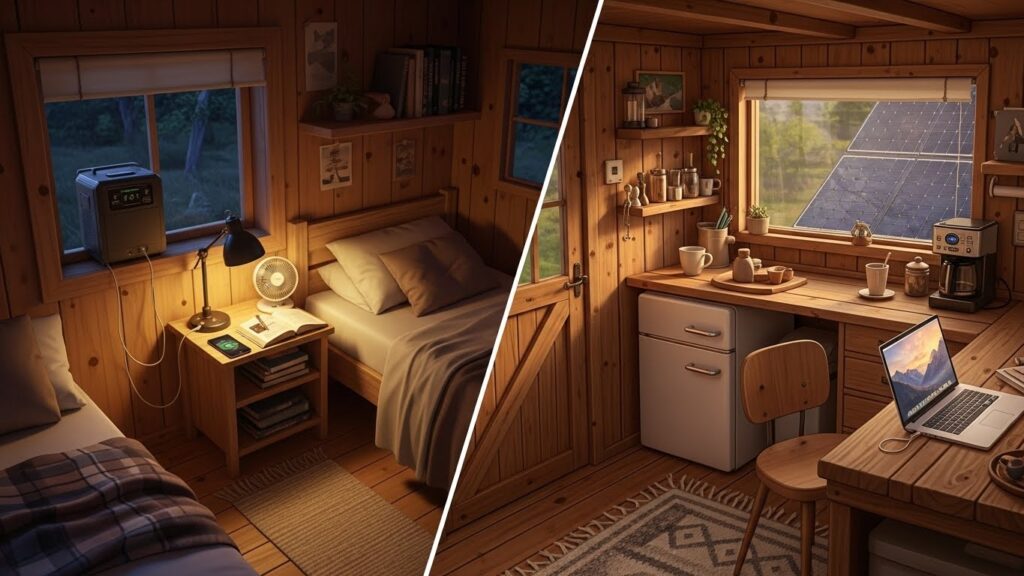
If your weekends at the cabin are simple—just lights, phones, and a fan—a starter package like #1 is often enough. If you want more conveniences, like a refrigerator for the whole weekend or season, try a medium package (#2 or #3). These let you work and relax without worry.
Full-Time Off-grid Cabin (Daily Living).
For full-time, you’ll need a stable, powerful setup. Choose a large or modular bundle—like #4 or #5—to guarantee continuous power. High-end packages are more cost-effective long-term. They offer more extended warranties, better parts, and greater expandability. Assess your long-term plans, then decide on your level of investment.

Installation and Tips on Practical Cabin.
Mount panels on the roof to save space. Use ground mounting for easy setup—don’t bother with sun angles. Don’t place boards on the shaded side of trees.
Install your battery unit indoors in a cool, dry, well-ventilated place to protect it from extreme temperatures and moisture.
Install wiring of the right size to minimize power loss. In secluded areas, lock and monitor all equipment to prevent wildlife from accessing it.
Use the correct wire size (gauge) to minimize power loss. In remote areas, lock and monitor all parts to keep wild animals out. Most solar generator packages let you expand with additional batteries as needed.
If you have extra storage capacity, you can add them.
Does the bundle work in a low-sunlight location?
If your system is in a low-sun area, find your daily energy use and the average number of sun hours. Higher battery capacity helps during rainy weather. You may need a backup generator for emergencies.
Bundles tax credit eligible, or incentive eligible?
Specific solar generator systems may qualify for federal or state tax credits. Consult a tax expert to confirm whether your purchase complies with your jurisdiction’s regulations.
Powering Your Off-Grid Dream
The right solar generator for your off-grid setup is determined by a realistic analysis of your power needs, the amount of sunlight in your area, and your budget. You can have a stable, comfortable experience by selecting a bundle that suits your real-world use case. The first one is to calculate the amount of energy you require daily, and the second one is to select a system with an adequate capacity and solar input.
Ready to find the perfect fit?
Check the offers for all our models, compare them, and browse now at myelectricgenerators.com.